

How to Size Wading Boots (Hint: Not Like Sneakers)
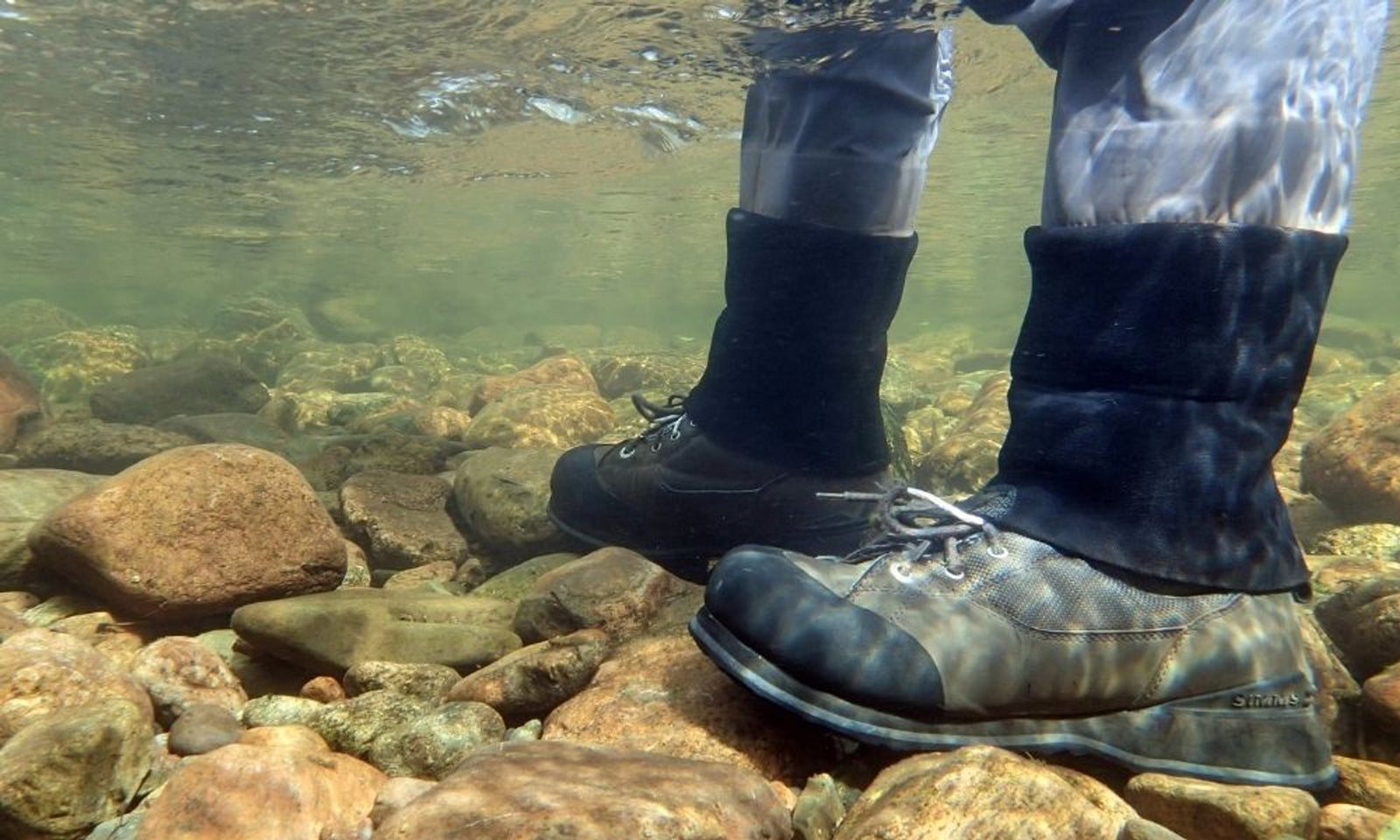
More wading discomfort comes from wrong-sized boots than from any other gear mistake — and it's an easy one to avoid once you know how wading boot sizing actually works.
The one-size-up rule (usually)
Wading boots go over your waders' neoprene stockingfeet, which add roughly a half-size of bulk. Most manufacturers build that in, so the standard advice is to buy your street shoe size — but brands vary, and if you're between sizes or wear thick socks, go up. What you never want is a boot that presses your toes: tight boots plus cold water equals numb feet by 10 a.m.
Try them on the way you'll wear them
The only real test: wader stockingfeet (or a thick wool sock as a stand-in), boot laced snug, then walk. Your heel should stay planted, toes free to wiggle, no pressure points across the top of your foot. At the shop we keep loaner stockingfeet by the boot wall for exactly this — five minutes on the carpet in Montrose saves a season of sore feet on the Gunnison.
Think about your socks and season
If you fish through the winter, you'll want room for a midweight and a heavy sock without cutting circulation — circulation, not insulation, is what keeps feet warm. Summer wet-waders: some anglers size differently if they'll wear boots with just neoprene guard socks, so mention it when you're buying.
Signs you got it wrong
Heel lift and blisters mean too big or under-laced. Numb toes in cold water mean too small. Ankle rolling on cobble usually means the boot's too soft for the water you fish, not the wrong size — the Uncompahgre's bowling-ball rocks reward a stiffer boot.
Browse our wading boots online, or better, come stand in a pair — fit is the one thing the internet can't ship.