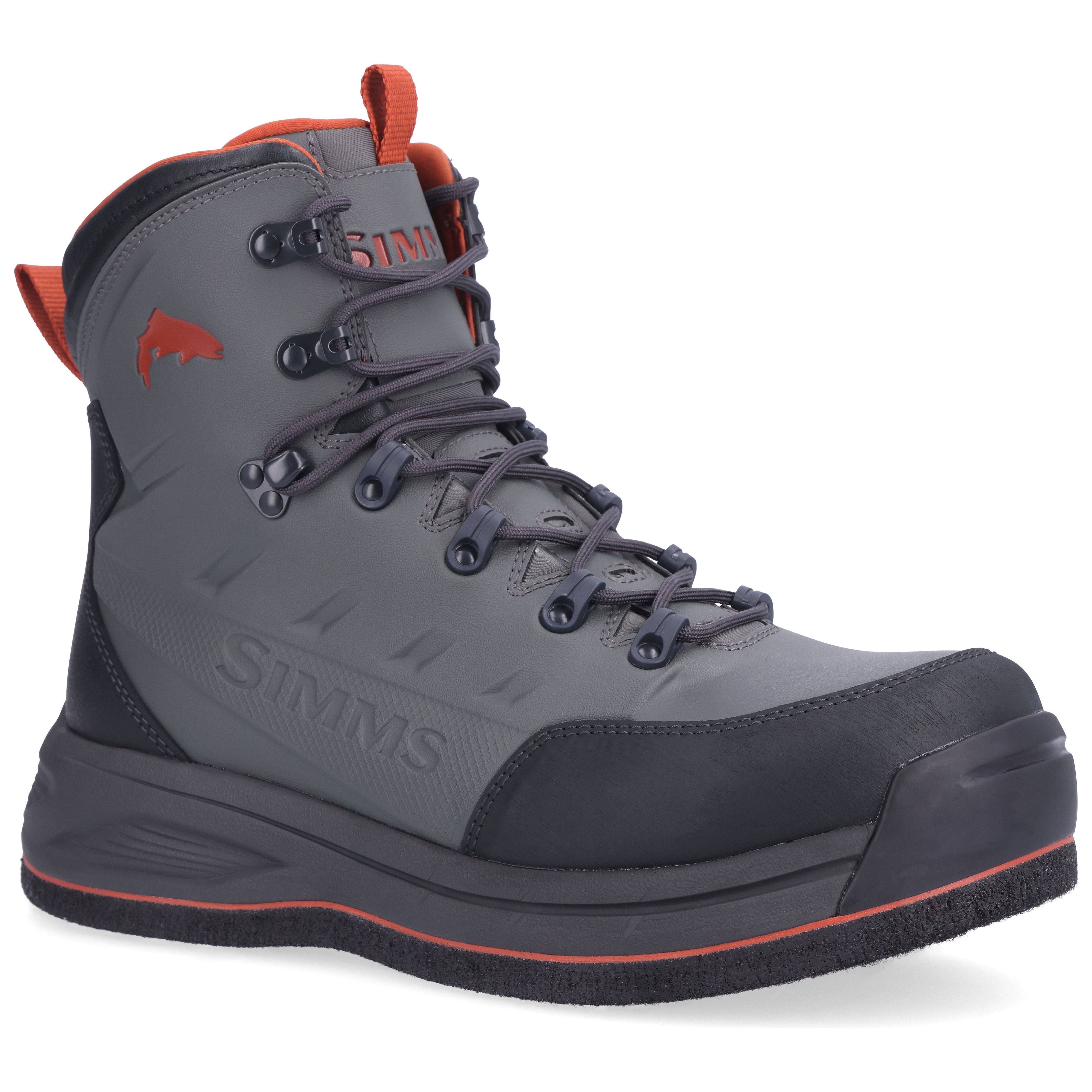
The guide standard with a BOA dial and a felt sole. Same G3 Guide platform — work-boot construction, Simms's top ankle support rating of 5 out of 5, and a re-soling program that keeps a worn pair out of the landfill.
Why BOA on a felt boot makes particular sense: felt boots are the ones you are most likely to be swapping in and out of, since good practice means drying them thoroughly between rivers. A dial you can crank one-handed in gloves beats frozen laces every time.
Construction
Current pricing is on the selector above.
Felt, honestly
Nothing grips slick, algae-covered freestone like felt, and in heavy water that is a genuine safety margin. That is why it still exists and why guides still use it.
The cost is biosecurity: felt stays wet and holds mud far longer than rubber, which makes it the best-known carrier of whirling disease spores and didymo between drainages. Some states have banned it outright. Colorado has not, but whirling disease has a real history here.
If you fish one river, felt is a fine choice — scrub, rinse, and dry completely between trips. If you move between drainages regularly, take the Vibram version of this same boot, which Simms rates identically for traction, and add studs. We stock both.
Sizing: boots go over your wader booties, so Simms says size one full size up from your street shoe, and half sizes round up. Bring your waders in and try them on over the top — call 970-964-9991 and we will have sizes ready.
Warranty: defects in workmanship and materials covered; wear-related damage repaired for a reasonable fee. Simms's 60-day and one-year terms apply to waders only, not footwear.
Ed's Fly Shop, 432 E Main St, downtown Montrose, Colorado.